The Role of Lighting: Day/Night Cycles for Hamster Health and Cat Calm
Your Pets Are Totally Judging Your Terrible Lighting (And It's Messing With Them)
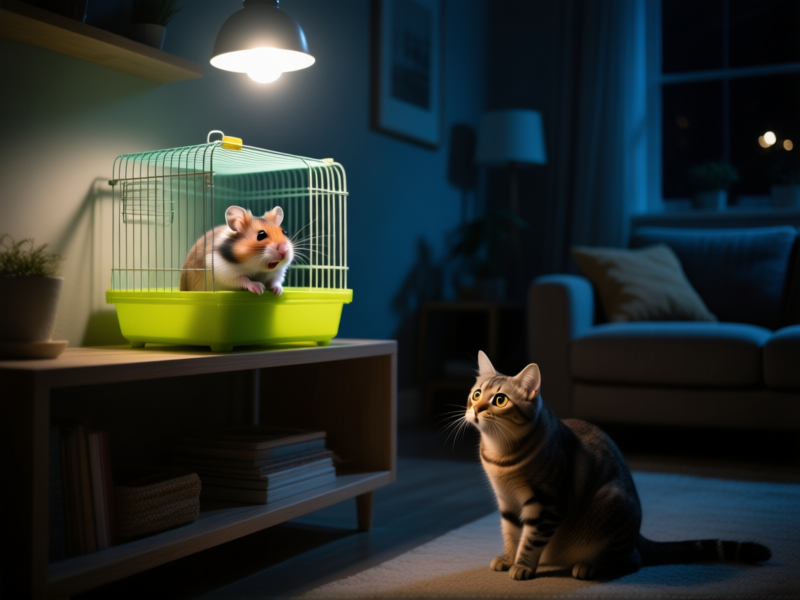
Here’s an uncomfortable truth. That lamp you leave on all night for "security" or the blinding overhead light you use until bedtime? Your pets hate it. I mean, they probably still love you, but they *hate* the lighting. We live in a 24/7 world of screens and switches, but our hamster and cat roommates are still running on ancient, sun-powered software. For a hamster, messed up light means a messed up life. For a cat, it often means turning your 3 AM into a parkour gym session. Let's fix that.
The Hamster's Non-Negotiable: Pitch Black Means "Go Time"
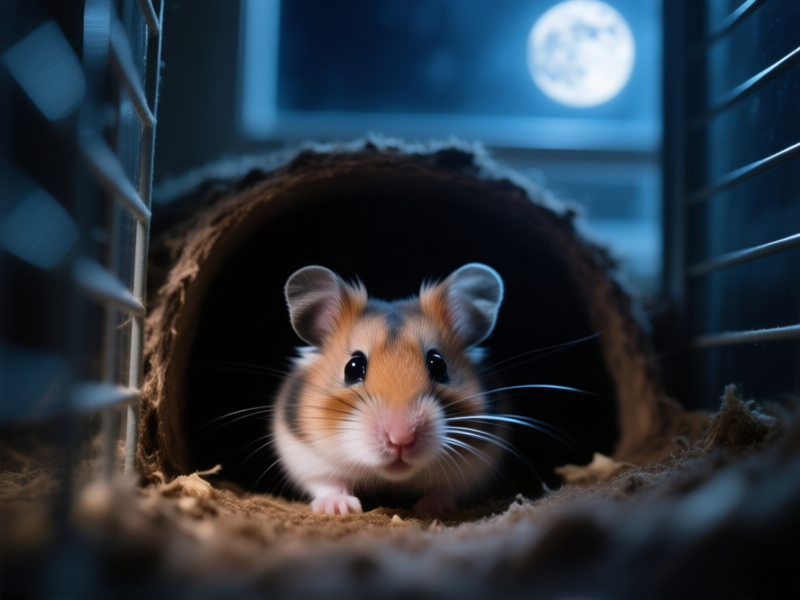
Hamsters are crepuscular. Fancy word for "party starts at dusk." Their entire circadian rhythm is a solar-powered clock. Light tells them to hide and sleep. Darkness tells them it's safe to run miles on their wheel, forage, and be a hamster. A constantly lit room, especially at night, is pure psychological torture. It causes chronic stress, suppresses their natural activity, and can lead to weird, lethargic behavior. They need a solid 12-14 hours of reliable, uninterrupted darkness. No night lights. No hallway glow. Think of their cage like a little cave that respects the sunset.
The Cat's Midnight Crazies: It's Not Spite, It's Biology
Meanwhile, your cat isn't trying to drive you insane at 4 AM. Probably. Cats are most active at dawn and dusk (crepuscular buddies, but more flexible). In a pitch-black house, with zero stimulation, their instincts kick in. That's the prime hunting window. Your toes under the blanket become prey. The solution isn't more light when *you* sleep, but better light before. A predictable dimming cycle signals wind-down time. It tells their brain, "The hunt is over, the human is lump-shaped on the bed, time to groom and snooze." You're not fighting the cat; you're hacking the environment.
The Magic Bullet: Smart Plugs & Sunset Schedules
You don't need a degree in animal psych. You need a $15 smart plug and ten minutes. This is the easiest win in pet ownership. For the hamster room: set a lamp on a strict schedule. On at 7 PM, off at 7 AM (or whatever mirrors natural sunset/sunrise in your area). For the cat: in the main living area, have a lamp on a "sunset" timer. Starting an hour before your bedtime, have it slowly dim (if you have a dimmable smart bulb) or just turn off. This creates a powerful environmental cue. The dark isn't something that just *happens* when you flip a switch. It's a scheduled, predictable event. It’s cheap. It’s automatic. It works.
A Coexistence Hack: Lights Out, Peace In
This is where it all comes together for a multi-species home. When the hamster gets its sacred dark time, it's happier, healthier, and less stressed. A less-stressed rodent is a less interesting target. When the cat gets a proper dimming cycle in the evening, it's more likely to settle down with you. You're managing their worlds through the simplest signal possible: light. You're not training the cat to ignore the hamster (good luck). You're giving the hamster the security of true night and giving the cat the routine it craves. Separate problems, one elegant, techy solution.
Keep It Simple: Your DIY Lighting Checklist
Forget complex setups. Here's your bare-minimum action plan. Get a smart plug for the hamster's room light. Set a solid 12-hour on/off schedule. Use warm-white bulbs—cool blue light is disruptive. For the cat, put your main living room lamp on a smart plug too. Set it to turn off when you go to bed. If the hamster cage is in a common area, consider a small, dedicated dimmable light for its day cycle, placed to not flood the cat's area. Blackout curtains are a bonus for day-sleeping pets. That's it. You've just become a pet-lighting ninja. Now go enjoy the quiet nights.