Under-Stair Solutions: Creating a Cozy Pet Nook with Dual Habitats
That Awkward Space Under Your Stairs is Prime Pet Real Estate
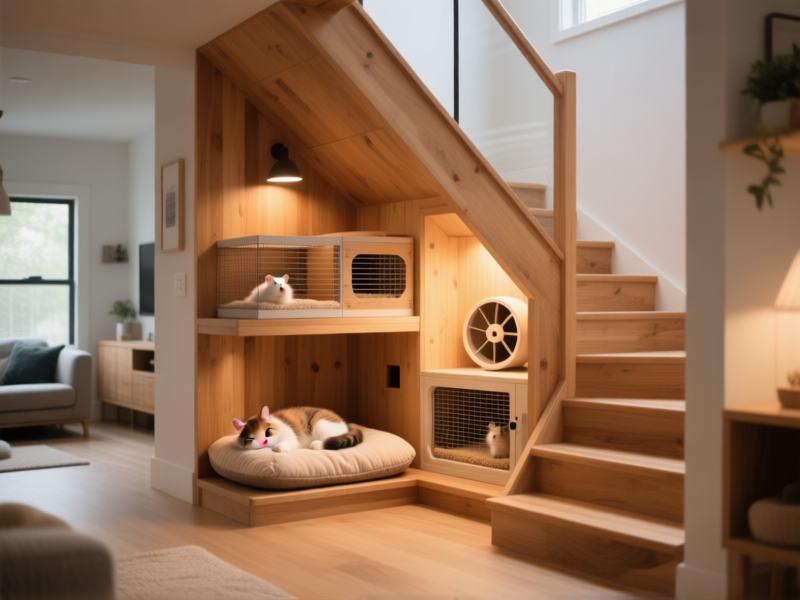
Let's be honest. That triangle of darkness under your stairs is probably storing a vacuum cleaner and three half-empty paint cans. It's dead space. But what if it wasn't? What if that weird architectural quirk could actually solve a problem? Here's the thing: our pets need territory. And our homes, especially smaller ones, need clever solutions. Turning that under-stair void into a dedicated pet haven isn't just a craft project. It's a genius reclaiming of square footage. You get a tidy home, and your furry overlords get their own custom kingdom. It’s a win-win disguised as a weekend build.
Stop Guessing, Start Measuring: Your Blueprint for Success

Before you grab a hammer, grab a tape measure. And a notepad. This is the most critical step. You're not just building a shelf; you're engineering a habitat. Get the exact height, depth, and slope of the space. Now, think about your residents. Got a cat that loves to climb? Vertical space is key. Have a hamster or guinea pig? They need a secure, ventilated enclosure at a manageable height. Sketch it out. Seriously. A rough drawing will save you from a costly "oops" later. Plan where the cat platforms will go, where the small animal cage will slot in, and crucially, how you'll access everything for cleaning. Measure twice, build once. It's a cliché for a reason.
Building the Ultimate Under-Stair Cat Tree
Forget the wobbly store-bought towers. This is permanent infrastructure. Your goal is to create a climbing route. Use the stair's natural slope. Anchor solid wooden shelving brackets into the studs—this isn't the place for drywall anchors. The platforms themselves can be simple sanded and sealed plywood, or add carpet tiles for grip and comfort. Integrate a sisal rope-wrapped post for scratching; just secure a 4x4 to the floor and the underside of a step. The crown jewel? A cozy, enclosed hideaway in the deepest, darkest corner. A simple wooden box with a circular entrance hole, lined with a soft blanket. It taps into their cave-dweller instincts. Instant favorite spot.
The Secret Life: Hiding a Hamster or Small Animal Habitat
Hamster cages are functional. They are rarely beautiful. Here's your chance to fix that. Instead of a plastic tub sitting out, build it in. Design a ventilated cabinet that slides out like a drawer or has doors that open wide. The key is airflow—use metal mesh or drilled panels on the sides and back, disguised behind a slim frame. This isn't an airtight box. Plan for easy access to change water, add food, and, let's be real, clean the bedding. You can elevate the cage inside the cabinet so it's at a comfortable height. The result? Your small pet gets a safe, stable home, and you get to hide the whole operation behind a beautiful door. It's a stealth habitat.
The Finishing Touches That Make It a Home
Construction is done. Now for the fun part: personality. This is where you kill the "DIY project" vibe and create a "feature." A plug-in, low-voltage LED strip or fairy lights adds magical ambiance and makes the nook inviting at night. Add a hook for their favorite toys. Maybe a tiny framed picture of them on the side. For the cat area, toss in a worn T-shirt of yours—your scent is the ultimate comfort. The goal is to make this a place they *choose* over the couch or your keyboard. It should feel like their special corner of the world, because it is. You built it for them.